Coefficient:
8.125 2025/26
Ranking position:
44 2025/26
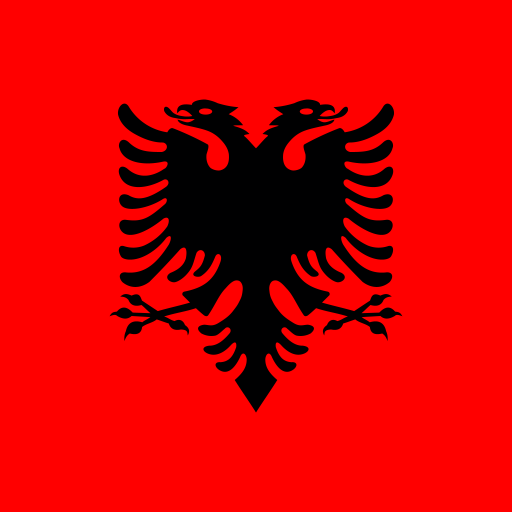 Albania
Albania has 4 representatives in European competitions in the 2026/27 season: Egnatia Rrogozhinë, AF Elbasani, Vllaznia Shkodër, Dinamo City Tirana thanks to its 46th place finish in the UEFA association coefficient ranking.
| 15 Oct 2026 15 Oct 2026 | Egnatia Rrogozhinë | 14% | 22% | 64% | FC Midtjylland | 2026/27 | Conference League | League phase – Matchday 1 | Head-to-head record and team comparison Egnatia Rrogozhinë - FC Midtjylland |
| Country | 2022/23 | 2023/24 | 2024/25 | 2025/26 | 2026/27 | Total | Difference | |||
|---|---|---|---|---|---|---|---|---|---|---|
| 39 |
 |
Liechtenstein | 6.500 | 0.500 | 0.500 | 1.000 | 2.500 | 11.000 | -2.000 | Countries comparison: Albania - Liechtenstein |
| 40 |
 |
Moldova | 3.750 | 2.000 | 2.125 | 1.500 | 0.875 | 10.250 | -1.250 | Countries comparison: Albania - Moldova |
| 41 |
 |
Faroe Islands | 2.250 | 2.750 | 1.500 | 1.750 | 1.625 | 9.875 | -0.875 | Countries comparison: Albania - Faroe Islands |
| 42 |
|
Albania | 0.875 | 2.125 | 1.250 | 2.250 | 2.500 | 9.000 | – | |
| 43 |
 |
North Macedonia | 1.625 | 1.500 | 0.666 | 3.343 | 1.833 | 8.967 | +0.033 | Countries comparison: Albania - North Macedonia |
| 44 |
 |
Belarus | 0.625 | 1.750 | 1.875 | 2.125 | 2.333 | 8.708 | +0.292 | Countries comparison: Albania - Belarus |
| 45 |
 |
Lithuania | 2.375 | 1.125 | 1.375 | 1.125 | 2.125 | 8.125 | +0.875 | Countries comparison: Albania - Lithuania |
Albania is 0.033 points ahead of 43rd place (North Macedonia) and 0.875 points behind 41st place (Faroe Islands).
| 2022/23 | 2023/24 | 2024/25 | 2025/26 | 2026/27 | Total |
|---|---|---|---|---|---|
| 0.875 | 2.125 | 1.250 | 2.250 | 2.500 | 8.125 |
Over the past five years, the country Albania has earned a total of 9.000 points in the UEFA competitions. Its best season was 2026/27, when it earned 2.500.
Albania belongs to the group of smaller European associations whose clubs mainly compete in the qualifying rounds of European competitions. In the UEFA country ranking, it currently sits around 40th place, alongside countries such as Lithuania, Estonia and Luxembourg. This position does not give Albanian clubs many advantages, but it allows the country to regularly enter several teams into European competition.
Albanian football is heavily dependent on the outcome of the qualifying rounds. One successful two-legged tie can mean progression to the next round and valuable points, while the early elimination of several teams can severely limit the country's overall tally. In practice, Albania primarily needs greater consistency, as individual successful campaigns are not enough to produce a sustained rise in the rankings.
The development of Albanian football was hindered for many years by the country's political isolation. Albania remained on the margins of European sport for a long period, while its clubs did not regularly participate in international competitions. In the 1970s, there was even a several-year gap during which Albanian teams did not compete in European cups.
The first Albanian club to play in the European Cup was Partizani Tirana. In the 1962/63 season, they faced Swedish side IFK Norrköping. It was an important moment, as it marked the entry of Albanian football into official competition with clubs from other parts of the continent.
Interestingly, political decisions had a direct influence on the country's sporting history. After Albania's relations with the Soviet Union deteriorated, the organisation of domestic competitions was changed, and Partizani were given the opportunity to make their European debut. Football was therefore not only a form of entertainment, but also part of the country's functioning during a period of international isolation.
The strongest European tradition belongs to KF Tirana. The capital club holds the Albanian record for appearances, matches played and two-legged ties won by an Albanian team. They reached the European Cup quarter-finals several times, a stage corresponding to the modern Champions League quarter-finals.
The best period for KF Tirana came in the 1980s. The Albanian club was then able to progress through the early rounds of major European competitions despite the enormous financial and organisational gap separating it from Western European opponents.
KF Tirana also became known for unusual encounters with established clubs. In European competition, they faced teams including Ajax, Bayern Munich, Celtic and other sides with considerably greater reputations. Each such tie was a special occasion for Albanian footballers, while for their opponents it often meant playing in a stadium with a very different atmosphere from the familiar venues of Western Europe.
Partizani Tirana are the second pillar of Albanian football. The club have won numerous domestic trophies and lifted the Balkan Cup in 1970. It was the only triumph by an Albanian team in the competition and remains one of the most important club achievements in the country's history.
Partizani also hold a special place in the history of European competition as Albania's first participant in the European Cup. The Tirana club have faced opponents such as Celtic, Benfica, Feyenoord and Fenerbahçe. For Albanian supporters, these matches had considerable symbolic importance, even when their team had little realistic chance of progressing.
One of the most significant modern achievements came from Skënderbeu Korçë. The club became the first Albanian side to reach the Champions League play-off round. They later also appeared in the Europa League group stage, which was a major event for the entire country.
Skënderbeu also became the first Albanian club to earn points in the group stage of a European competition. The Korçë side showed that effective management, a stable squad and successful performances in qualifying could allow a club from a small league to compete on a larger stage.
Skënderbeu's European campaigns also had a darker side, however. The club were later sanctioned by UEFA in connection with allegations of match-fixing. The case remains one of the most controversial episodes in Albanian football and serves as a reminder that rapid sporting development must be accompanied by transparency and appropriate oversight.
Flamurtari Vlorë also deserves a mention. The club from the south-western part of the country achieved one of the best results by an Albanian team in the UEFA Cup, reaching the round of 16. In European competition, Flamurtari were capable of causing problems for more highly regarded opponents, making use of the difficult atmosphere at their home ground and their characteristic Balkan style of play.
Vlorë is a port city on the Adriatic Sea, which gave Flamurtari's matches a distinctive setting. Visiting teams arrived in a place where football was closely connected with local identity, while the stadium itself was situated in surroundings very different from most traditional European football venues.
The most important modern venue in Albanian football is Air Albania Stadium, previously known as Arena Kombëtare. The stadium is located in the centre of Tirana, on the site of the former Qemal Stafa Stadium. The new arena was designed as a modern football venue while retaining particular historical significance for the residents of the capital.
The stadium is part of a larger complex that also includes commercial and hotel facilities. As a result, it is not used exclusively for football matches. The surrounding area has become an important urban centre, while the arena itself has become one of the most recognisable landmarks of modern Tirana.
An interesting feature is the stadium's name. Air Albania Stadium is named after the country's national airline, highlighting the importance of the national team in promoting Albania. The venue hosts Albania's national team as well as matches of major domestic and international significance.
Before the opening of the new national stadium, Elbasan Arena played an important role. The venue underwent extensive renovation and for a period served as the main home of the Albanian national team. The stadium became known for its intense atmosphere, created by groups of supporters using the country's red and black colours.
Elbasan Arena has a more intimate character than the stadium in Tirana. The proximity of the stands means that the supporters are highly noticeable to the players, and national team matches can resemble club games in terms of emotion and intensity. For Albanian footballers, playing at such a venue often meant receiving strong support from the home crowd.
The Albanian national team play in red shirts featuring a black double-headed eagle. The symbol also appears on the national flag and has enormous historical significance. In football, it has become an identifying symbol of both the national team and the Albanian diaspora.
Interestingly, Albanian players competing in foreign leagues often have a greater influence on the national team's results than those who develop exclusively in the domestic system. Many internationals were born or raised outside Albania, including in Switzerland, Germany, Italy and England. This allows the national team to benefit from the experience gained in Western European football development systems.
Despite limited resources, Albanian football has several strengths: passionate supporters, a long club tradition, the importance of the capital and increasingly improved infrastructure. Every qualification for a league phase is an important event for Albania, while strong performances can attract players, sponsors and the attention of foreign clubs.
Albania remains a developing football league, but its history shows that even under difficult circumstances it is possible to build teams capable of producing European surprises. The combination of Balkan character, footballing passion and the experience of Albanian players developed abroad means that Albanian clubs can still cause problems for considerably wealthier opponents.
| Club | 2021/22 | 2022/23 | 2023/24 | 2024/25 | 2025/26 | Total | ||
|---|---|---|---|---|---|---|---|---|
| 181 |
|
Partizani Tirana | 1.500 | 1.000 | 2.500 | 1.500 | 1.000 | 7.500 |
| 202 |
|
Vllaznia Shkodër | 1.500 | 1.500 | 1.000 | 1.000 | 1.500 | 6.500 |
| 249 |
|
Egnatia Rrogozhinë | 0.000 | 0.000 | 1.000 | 1.500 | 2.000 | 4.500 |
| 268 |
|
KF Tirana | 0.000 | 1.500 | 1.500 | 1.000 | 0.000 | 4.000 |
| 282 |
|
KF Laçi | 2.000 | 1.500 | 0.000 | 0.000 | 0.000 | 3.500 |
| 329 |
|
Dinamo City Tirana | 0.000 | 0.000 | 0.000 | 0.000 | 2.500 | 2.500 |
| 355 |
|
Teuta Durrës | 2.000 | 0.000 | 0.000 | 0.000 | 0.000 | 2.000 |
| Club | Elo | Chart | Last changes | ||||||||||||
|---|---|---|---|---|---|---|---|---|---|---|---|---|---|---|---|
| 1 |
|
Egnatia Rrogozhinë | 1253 |
20 Sep 2026 2:1 vs Partizani Tirana League +4.69 |
13 Sep 2026 1:2 vs AF Elbasani League -11.29 |
4 Sep 2026 2:1 vs KF Skënderbeu League +3.38 |
31 Aug 2026 3:1 vs KF Vora League +7.02 |
27 Aug 2026 1:2 vs Lillestrøm SK Europa League Qualifications - Play-off -2.64 |
23 Aug 2026 3:0 vs KF Tirana League +5.07 |
20 Aug 2026 0:0 vs Lillestrøm SK Europa League Qualifications - Play-off -0.33 |
13 Aug 2026 5:1 vs Shamrock Rovers Europa League Qualifications - Round 3 +23.33 |
4 Aug 2026 1:3 vs Shamrock Rovers Europa League Qualifications - Round 3 -11.88 |
28 Jul 2026 2:2 vs NK Celje Champions League Qualifications - Round 2 +9.15 |
||
| 2 |
|
Dinamo City Tirana | 1183 |
19 Sep 2026 3:1 vs KF Laçi League +5.30 |
12 Sep 2026 4:2 vs Partizani Tirana League +10.16 |
6 Sep 2026 2:1 vs AF Elbasani League +8.40 |
31 Aug 2026 1:0 vs KF Skënderbeu League +8.82 |
27 Aug 2026 2:4 vs Pafos FC Conference League Qualifications - Play-off +3.78 |
23 Aug 2026 0:1 vs KF Vora League -14.11 |
20 Aug 2026 1:1 vs Pafos FC Conference League Qualifications - Play-off +7.87 |
13 Aug 2026 4:0 vs FK Auda Conference League Qualifications - Round 3 +21.39 |
4 Aug 2026 0:1 vs FK Auda Conference League Qualifications - Round 3 -9.09 |
30 Jul 2026 3:0 vs Aluminij Kidricevo Conference League Qualifications - Round 2 +11.80 |
||
| 3 |
|
AF Elbasani | 1166 |
20 Sep 2026 2:2 vs KF Tirana League +0.23 |
13 Sep 2026 2:1 vs Egnatia Rrogozhinë League +11.29 |
6 Sep 2026 1:2 vs Dinamo City Tirana League -8.40 |
29 Aug 2026 1:1 vs Vllaznia Shkodër League -2.92 |
22 Aug 2026 1:1 vs KF Laçi League -1.77 |
16 Jul 2026 0:0 vs BATE Borisov Conference League Qualifications - Round 1 +2.73 |
7 Jul 2026 1:1 vs BATE Borisov Conference League Qualifications - Round 1 +0.15 |
31 May 2026 2:1 vs Vllaznia Shkodër League +11.51 |
24 May 2026 3:0 vs Dinamo City Tirana League +11.30 |
17 May 2026 0:4 vs Egnatia Rrogozhinë League -14.71 |
||
| 4 |
|
Teuta Durrës | 1123 |
18 Sep 2026 2:0 vs Vllaznia Shkodër League +11.42 |
12 Sep 2026 2:0 vs KF Vora League +7.24 |
5 Sep 2026 3:1 vs KF Laçi League +10.76 |
30 Aug 2026 3:1 vs KF Tirana League +9.11 |
22 Aug 2026 0:0 vs Partizani Tirana League +2.65 |
10 May 2026 3:2 vs Egnatia Rrogozhinë League +10.98 |
6 May 2026 1:1 vs Flamurtari Vlorë League +1.17 |
2 May 2026 0:1 vs KF Tirana League -11.67 |
26 Apr 2026 0:2 vs Bylis Ballsh League -9.42 |
18 Apr 2026 1:2 vs AF Elbasani League -9.58 |
||
| 5 |
|
KF Tirana | 1113 |
20 Sep 2026 2:2 vs AF Elbasani League -0.23 |
11 Sep 2026 1:1 vs KF Skënderbeu League -0.51 |
6 Sep 2026 4:0 vs KF Vora League +9.36 |
30 Aug 2026 1:3 vs Teuta Durrës League -9.11 |
23 Aug 2026 0:3 vs Egnatia Rrogozhinë League -5.07 |
10 May 2026 3:1 vs AF Elbasani League +13.43 |
6 May 2026 1:0 vs Vllaznia Shkodër League +10.59 |
2 May 2026 1:0 vs Teuta Durrës League +11.67 |
25 Apr 2026 2:1 vs Partizani Tirana League +10.17 |
18 Apr 2026 1:1 vs Dinamo City Tirana League +3.36 |
||
| 6 |
|
Partizani Tirana | 1098 |
20 Sep 2026 1:2 vs Egnatia Rrogozhinë League -4.69 |
12 Sep 2026 2:4 vs Dinamo City Tirana League -10.16 |
5 Sep 2026 3:2 vs Vllaznia Shkodër League +12.37 |
29 Aug 2026 1:2 vs KF Laçi League -13.49 |
22 Aug 2026 0:0 vs Teuta Durrës League -2.65 |
10 May 2026 2:1 vs Dinamo City Tirana League +8.71 |
6 May 2026 0:2 vs Egnatia Rrogozhinë League -7.11 |
2 May 2026 1:4 vs Flamurtari Vlorë League -14.12 |
25 Apr 2026 1:2 vs KF Tirana League -10.17 |
19 Apr 2026 1:1 vs Bylis Ballsh League -4.22 |
||
| 7 |
|
Vllaznia Shkodër | 1090 |
18 Sep 2026 0:2 vs Teuta Durrës League -11.42 |
13 Sep 2026 0:2 vs KF Laçi League -10.06 |
5 Sep 2026 2:3 vs Partizani Tirana League -12.37 |
29 Aug 2026 1:1 vs AF Elbasani League +2.92 |
21 Aug 2026 2:2 vs KF Skënderbeu League -3.84 |
15 Jul 2026 0:5 vs FC Malisheva Conference League Qualifications - Round 1 -15.79 |
9 Jul 2026 2:1 vs FC Malisheva Conference League Qualifications - Round 1 +6.69 |
31 May 2026 1:2 vs AF Elbasani League -11.51 |
23 May 2026 1:2 vs Egnatia Rrogozhinë League -11.37 |
16 May 2026 0:2 vs Dinamo City Tirana League -13.23 |
||
| 8 |
|
Bylis Ballsh | 1078 |
10 May 2026 2:5 vs KF Vora League -9.07 |
6 May 2026 2:1 vs AF Elbasani League +11.30 |
2 May 2026 2:0 vs Vllaznia Shkodër League +14.98 |
26 Apr 2026 2:0 vs Teuta Durrës League +9.42 |
19 Apr 2026 1:1 vs Partizani Tirana League +4.22 |
13 Apr 2026 1:1 vs Dinamo City Tirana League +0.74 |
4 Apr 2026 0:3 vs Egnatia Rrogozhinë League -4.45 |
21 Mar 2026 2:1 vs Flamurtari Vlorë League +7.62 |
14 Mar 2026 0:1 vs KF Tirana League -8.60 |
8 Mar 2026 1:0 vs KF Vora League +7.75 |
||
| 9 |
|
KF Vora | 1057 |
19 Sep 2026 1:1 vs KF Skënderbeu League -2.32 |
12 Sep 2026 0:2 vs Teuta Durrës League -7.24 |
6 Sep 2026 0:4 vs KF Tirana League -9.36 |
31 Aug 2026 1:3 vs Egnatia Rrogozhinë League -7.02 |
23 Aug 2026 1:0 vs Dinamo City Tirana League +14.11 |
10 May 2026 5:2 vs Bylis Ballsh League +9.07 |
6 May 2026 2:2 vs Dinamo City Tirana League +3.59 |
2 May 2026 4:2 vs AF Elbasani League +12.55 |
26 Apr 2026 2:0 vs Egnatia Rrogozhinë League +15.52 |
18 Apr 2026 0:0 vs Vllaznia Shkodër League +3.28 |
||
| 10 |
|
KF Laçi | 1055 |
19 Sep 2026 1:3 vs Dinamo City Tirana League -5.30 |
13 Sep 2026 2:0 vs Vllaznia Shkodër League +10.06 |
5 Sep 2026 1:3 vs Teuta Durrës League -10.76 |
29 Aug 2026 2:1 vs Partizani Tirana League +13.49 |
22 Aug 2026 1:1 vs AF Elbasani League +1.77 |
12 Aug 2026 -27.58 |
27 Apr 2025 1:1 vs Vllaznia Shkodër League +4.03 |
19 Apr 2025 1:0 vs Dinamo City Tirana League +10.59 |
12 Apr 2025 0:1 vs Teuta Durrës League -7.59 |
6 Apr 2025 1:2 vs KF Skënderbeu League -11.95 |
||
| 11 |
|
Flamurtari Vlorë | 1044 |
10 May 2026 0:2 vs Vllaznia Shkodër League -5.34 |
6 May 2026 1:1 vs Teuta Durrës League -1.17 |
2 May 2026 4:1 vs Partizani Tirana League +14.12 |
27 Apr 2026 3:1 vs Dinamo City Tirana League +11.21 |
18 Apr 2026 2:0 vs Egnatia Rrogozhinë League +16.18 |
11 Apr 2026 1:1 vs KF Vora League -1.36 |
3 Apr 2026 1:1 vs KF Tirana League -0.41 |
21 Mar 2026 1:2 vs Bylis Ballsh League -7.62 |
14 Mar 2026 1:2 vs AF Elbasani League -7.62 |
8 Mar 2026 1:0 vs Vllaznia Shkodër League +13.52 |
||
| 12 |
|
KF Skënderbeu | 1039 |
19 Sep 2026 1:1 vs KF Vora League +2.32 |
11 Sep 2026 1:1 vs KF Tirana League +0.51 |
4 Sep 2026 1:2 vs Egnatia Rrogozhinë League -3.38 |
31 Aug 2026 0:1 vs Dinamo City Tirana League -8.82 |
21 Aug 2026 2:2 vs Vllaznia Shkodër League +3.84 |
11 Aug 2026 -26.98 |
27 Apr 2025 1:2 vs Bylis Ballsh League -12.48 |
19 Apr 2025 0:0 vs Egnatia Rrogozhinë League +4.38 |
12 Apr 2025 1:1 vs KF Tirana League -1.24 |
6 Apr 2025 2:1 vs KF Laçi League +11.95 |
||