Coefficient:
13.750 2025/26
Ranking position:
37 2025/26
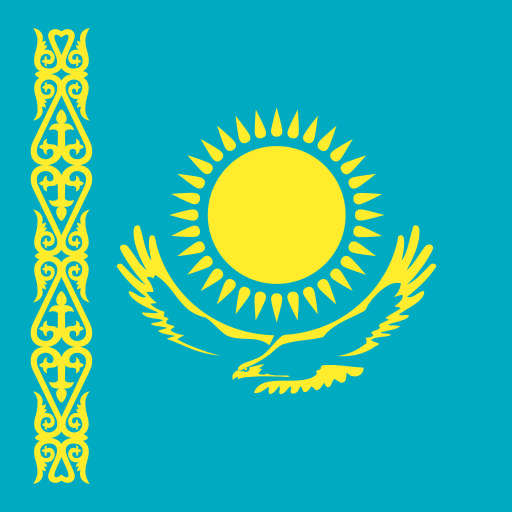 Kazakhstan
Kazakhstan has 4 representatives in European competitions in the 2026/27 season: Kairat Almaty, FC Astana, Yelimay Semey, Tobol Kostanay thanks to its 39th place finish in the UEFA association coefficient ranking.
| 15 Oct 2026 15 Oct 2026 | Riga FC | 46% | 25% | 29% | Kairat Almaty | 2026/27 | Conference League | League phase – Matchday 1 | Head-to-head record and team comparison Riga FC - Kairat Almaty |
| Country | 2022/23 | 2023/24 | 2024/25 | 2025/26 | 2026/27 | Total | Difference | |||
|---|---|---|---|---|---|---|---|---|---|---|
| 35 |
 |
Bosnia and Herzegovina | 2.000 | 2.250 | 4.531 | 3.312 | 1.875 | 13.968 | -1.593 | Countries comparison: Kazakhstan - Bosnia and Herzegovina |
| 36 |
 |
Latvia | 2.750 | 1.625 | 3.875 | 2.000 | 3.625 | 13.875 | -1.500 | Countries comparison: Kazakhstan - Latvia |
| 37 |
 |
Finland | 2.625 | 1.750 | 2.250 | 3.625 | 3.375 | 13.625 | -1.250 | Countries comparison: Kazakhstan - Finland |
| 38 |
|
Kazakhstan | 1.125 | 3.125 | 3.000 | 3.625 | 1.500 | 12.375 | – | |
| 39 |
 |
Liechtenstein | 6.500 | 0.500 | 0.500 | 1.000 | 2.500 | 11.000 | +1.375 | Countries comparison: Kazakhstan - Liechtenstein |
| 40 |
 |
Moldova | 3.750 | 2.000 | 2.125 | 1.500 | 0.875 | 10.250 | +2.125 | Countries comparison: Kazakhstan - Moldova |
| 41 |
 |
Faroe Islands | 2.250 | 2.750 | 1.500 | 1.750 | 1.625 | 9.875 | +2.500 | Countries comparison: Kazakhstan - Faroe Islands |
Kazakhstan is 1.375 points ahead of 39th place (Liechtenstein) and 1.250 points behind 37th place (Finland).
| 2022/23 | 2023/24 | 2024/25 | 2025/26 | 2026/27 | Total |
|---|---|---|---|---|---|
| 1.125 | 3.125 | 3.000 | 3.625 | 1.500 | 13.750 |
Over the past five years, the country Kazakhstan has earned a total of 12.375 points in the UEFA competitions. Its best season was 2025/26, when it earned 3.625.
Kazakhstan is positioned around 40th place in the UEFA country ranking. It is surrounded by countries such as Finland, Bosnia and Herzegovina and Latvia, while Liechtenstein, Moldova and the Faroe Islands are among the countries ranked below it. This shows that Kazakh football belongs to the lower part of the European hierarchy, but remains competitive among the smaller associations.
In recent seasons, Kazakhstan's results have been relatively stable. The country does not earn a huge number of points, but its clubs regularly progress through at least some qualifying rounds. The 2025/26 season was the strongest period, with Kazakhstan's representatives earning significantly more points than in several previous campaigns.
Kazakhstan is a transcontinental country. Most of its territory lies in Asia, but a small area west of the Ural River is located in Europe. This geographical position allowed the Kazakh Football Federation to apply for UEFA membership.
During the first years after the dissolution of the Soviet Union, Kazakhstan belonged to the Asian Football Confederation. In 2002, however, it moved to UEFA. The decision had both sporting and organisational significance: Kazakh clubs could compete against European teams, while the national team gained access to European qualifying competitions.
This choice also creates major logistical challenges. Kazakhstan is one of the world's largest countries, and the distances between its cities are enormous. A journey from Almaty to the western part of the country can involve several hours of air travel, while European opponents must additionally cover thousands of kilometres to reach Kazakhstan.
The most recognisable club in Kazakhstan is Astana. The team established its position relatively recently, but quickly became the country's most prominent representative in European competitions.
Astana became the first Kazakh club to reach the Champions League group stage. In qualifying, it eliminated APOEL Nicosia and later faced teams including Atlético Madrid, Benfica and Galatasaray. The achievement was historic, as it marked the first time a club from Kazakhstan had reached the group stage of Europe's premier club competition.
In the group stage, Astana earned points against established opponents. Home matches played in challenging weather conditions became an important part of its European identity. Visiting teams had to adapt to the time difference, long travel and temperatures considerably lower than those in many Western European cities.
Astana remains one of the highest-ranked Kazakh clubs. During the period under review, it earned points in almost every season, making it one of the main contributors to the country's coefficient.
The second most important club is Kairat Almaty. It is one of Kazakhstan's most successful teams and one of the country's longest-established clubs among its current European representatives.
For many years, Kairat was a symbol of football in southern Kazakhstan. Almaty, the former capital and the country's largest city, has a more cosmopolitan character than Astana. The club benefits from a larger market, a strong fan base and a tradition dating back to the Soviet era.
In recent seasons, Kairat has been one of the main sources of Kazakhstan's coefficient points. Its club coefficient places it around the top 150 in the UEFA club ranking.
Kairat also made history by reaching the Champions League league phase after defeating Celtic. The tie was decided on penalties following a goalless aggregate score. It was one of the biggest moments in the history of Kazakh club football and an important demonstration that a team from Central Asia could eliminate a well-known British club.
An important representative of Kazakhstan is Tobol Kostanay. The club from the northern part of the country regularly competes in the qualifying rounds of the Europa League and Conference League. Its contribution is smaller than that of Astana and Kairat, but Tobol has managed to earn points over several consecutive seasons.
Other Kazakh clubs to have appeared in European competitions include Ordabasy Shymkent, Aktobe, Shakhter Karagandy and Kyzylzhar Petropavlovsk. Their results have been more inconsistent. Some clubs have been eliminated in the early rounds, but participation in European competitions itself helps them gain experience and develop their infrastructure.
The geographical diversity of these teams is also notable. Kazakhstan's representatives come from distant parts of the enormous country: Almaty in the southeast, Astana in the north-central part of the country, Kostanay in the north and Shymkent close to the border with Uzbekistan. Each club operates in different climatic and social conditions.
Kazakhstan is one of the most logistically challenging destinations in European club competitions. Teams from Western Europe have to travel thousands of kilometres, often cross time zones and adapt to a different climate.
In Astana, winter temperatures can be extremely low, while summers can be very hot. Almaty, meanwhile, lies at the foot of the Tian Shan mountains, giving the city a completely different climate. Long journeys can affect recovery, tactical preparation and the planning of training camps.
For this reason, Kazakh clubs try to make the most of their home matches. Home advantage, weather conditions, the unusual kick-off time and the fatigue of the visiting team can give the hosts an advantage that is not reflected in the overall quality of the squad.
The most important stadium in Astana is Astana Arena. It is a modern venue with a partially retractable roof, allowing matches to be played in difficult weather conditions. The stadium was designed as a multi-purpose arena and can be used by both the national team and clubs.
In Almaty, the Central Stadium plays an important role. Located close to the city centre, the venue has a long history and is closely associated with the development of Kairat. Its location makes matches easily accessible to residents of one of Central Asia's largest urban areas.
Kazakh stadiums often combine elements of Soviet sports architecture with modern solutions. In many cities, extensive modernisation was necessary to meet UEFA requirements. For clubs from smaller centres, this meant investing not only in the playing surface, but also in floodlights, stands, changing rooms and media facilities.
Football is not the only major sport in Kazakhstan. Ice hockey, boxing, wrestling, cycling and basketball are also popular. In some regions, football competes for attention with a strong tradition of strength sports and winter disciplines.
Despite this, European competitions give Kazakh clubs exceptional visibility. Matches against Celtic, Atlético Madrid, Benfica and Galatasaray attract attention across the country and demonstrate that Kazakh teams can compete with clubs recognised around the world.
Kazakhstan has not won any European club competition, but its clubs have achieved several important successes. Astana reached the Champions League group stage, Kairat has regularly earned points in qualifying rounds, while Tobol and other teams have gradually increased their presence in European competitions.
Kazakhstan's greatest strength is the growing experience of Astana and Kairat. The main challenges are the distances involved, travel costs, climatic differences and the limited number of clubs capable of progressing through the qualifying rounds on a regular basis.
Kazakhstan therefore remains a unique participant in European football. Its presence in UEFA is a consequence of its transcontinental geography, but its sporting path is considerably more difficult than that of most European associations. Every success achieved by Astana, Kairat or Tobol matters not only for the country ranking, but also as evidence that football from distant Central Asia can establish itself on the European stage.
| Club | 2021/22 | 2022/23 | 2023/24 | 2024/25 | 2025/26 | Total | ||
|---|---|---|---|---|---|---|---|---|
| 129 |
|
Zhenis Astana | 2.000 | 1.500 | 3.000 | 4.000 | 2.000 | 12.500 |
| 130 |
|
FC Astana | 2.000 | 1.500 | 3.000 | 4.000 | 2.000 | 12.500 |
| 142 |
|
Kairat Almaty | 2.500 | 1.500 | 0.000 | 0.000 | 7.000 | 11.000 |
| 176 |
|
Tobol Kostanay | 2.000 | 2.000 | 2.500 | 1.500 | 0.000 | 8.000 |
| 246 |
|
FC Aktobe | 0.000 | 0.000 | 2.000 | 1.000 | 1.500 | 4.500 |
| 262 |
|
Ordabasy Shymkent | 0.000 | 0.000 | 1.500 | 2.000 | 1.000 | 4.500 |
| 312 |
|
Shakhter Karaganda | 2.500 | 0.000 | 0.000 | 0.000 | 0.000 | 2.500 |
| 353 |
|
Qyzyljar Petropavlovsk | 0.000 | 2.000 | 0.000 | 0.000 | 0.000 | 2.000 |
| 360 |
|
Kyzylzhar Petropavlovsk | 0.000 | 2.000 | 0.000 | 0.000 | 0.000 | 2.000 |
| Club | Elo | Chart | Last changes | ||||||||||||
|---|---|---|---|---|---|---|---|---|---|---|---|---|---|---|---|
| 1 |
|
Kairat Almaty | 1411 |
10 Oct 2026 1:0 vs Zhetysu Taldykorgan League +2.27 |
17 Sep 2026 0:1 vs FC Astana League -9.46 |
13 Sep 2026 1:4 vs Tobol Kostanay League -15.71 |
9 Sep 2026 3:0 vs Zhenis Astana League +3.24 |
5 Sep 2026 3:0 vs Kaspiy Aktau League +5.09 |
31 Aug 2026 2:0 vs Yelimay Semey League +7.77 |
27 Aug 2026 0:3 vs RSC Anderlecht Europa League Qualifications - Play-off -7.16 |
20 Aug 2026 0:3 vs RSC Anderlecht Europa League Qualifications - Play-off -12.14 |
15 Aug 2026 3:1 vs Ulytau Zhezkazgan League +2.50 |
11 Aug 2026 0:1 vs Levski Sofia Champions League Qualifications - Round 3 -15.25 |
||
| 2 |
|
Ordabasy Shymkent | 1376 |
17 Sep 2026 3:0 vs FC Atyrau League +6.36 |
12 Sep 2026 1:0 vs FC Astana League +9.02 |
5 Sep 2026 1:2 vs Okzhetpes Kokshetau League -11.75 |
29 Aug 2026 3:0 vs Kyzylzhar Petropavlovsk League +4.32 |
15 Aug 2026 3:1 vs Altai Semey League +2.15 |
8 Aug 2026 4:0 vs Zhetysu Taldykorgan League +7.20 |
2 Aug 2026 2:0 vs Tobol Kostanay League +6.48 |
26 Jul 2026 1:2 vs Kairat Almaty League -6.25 |
19 Jul 2026 3:1 vs Yelimay Semey League +6.60 |
11 Jul 2026 2:3 vs Kaspiy Aktau League -14.10 |
||
| 3 |
|
FC Astana | 1375 |
10 Oct 2026 1:2 vs Tobol Kostanay League -11.55 |
17 Sep 2026 1:0 vs Kairat Almaty League +9.46 |
12 Sep 2026 0:1 vs Ordabasy Shymkent League -9.02 |
6 Sep 2026 4:0 vs Yelimay Semey League +6.89 |
30 Aug 2026 3:2 vs FC Atyrau League +6.34 |
16 Aug 2026 1:1 vs Kyzylzhar Petropavlovsk League -3.20 |
9 Aug 2026 2:1 vs Okzhetpes Kokshetau League +4.88 |
2 Aug 2026 2:0 vs Ulytau Zhezkazgan League +6.07 |
26 Jul 2026 4:1 vs Altai Semey League +2.23 |
16 Jul 2026 1:4 vs Dinamo City Tirana Conference League Qualifications - Round 1 -19.69 |
||
| 4 |
|
FC Aktobe | 1309 |
10 Oct 2026 3:1 vs Yelimay Semey League +11.24 |
18 Sep 2026 2:2 vs Ulytau Zhezkazgan League -5.63 |
12 Sep 2026 2:1 vs Kaspiy Aktau League +8.25 |
5 Sep 2026 1:0 vs Zhenis Astana League +6.23 |
30 Aug 2026 1:2 vs Irtysh Pavlodar League -15.00 |
15 Aug 2026 2:1 vs Kaisar Kyzylorda League +8.91 |
9 Aug 2026 1:1 vs FC Atyrau League -1.36 |
1 Aug 2026 1:3 vs Kyzylzhar Petropavlovsk League -11.62 |
25 Jul 2026 2:1 vs Okzhetpes Kokshetau League +6.57 |
19 Jul 2026 4:2 vs Altai Semey League +5.50 |
||
| 5 |
|
Tobol Kostanay | 1284 |
10 Oct 2026 2:1 vs FC Astana League +11.55 |
17 Sep 2026 0:2 vs Yelimay Semey League -12.12 |
13 Sep 2026 4:1 vs Kairat Almaty League +15.71 |
6 Sep 2026 3:1 vs Ulytau Zhezkazgan League +5.67 |
30 Aug 2026 0:1 vs Kaspiy Aktau League -11.33 |
25 Aug 2026 3:2 vs Kaisar Kyzylorda League +6.18 |
16 Aug 2026 2:0 vs Irtysh Pavlodar League +6.11 |
13 Aug 2026 1:2 vs Partizan Belgrade Conference League Qualifications - Round 3 -9.65 |
6 Aug 2026 0:3 vs Partizan Belgrade Conference League Qualifications - Round 3 -6.10 |
2 Aug 2026 0:2 vs Ordabasy Shymkent League -6.48 |
||
| 6 |
|
Yelimay Semey | 1270 |
10 Oct 2026 1:3 vs FC Aktobe League -11.24 |
17 Sep 2026 2:0 vs Tobol Kostanay League +12.12 |
12 Sep 2026 2:1 vs Zhetysu Taldykorgan League +4.85 |
6 Sep 2026 0:4 vs FC Astana League -6.89 |
31 Aug 2026 0:2 vs Kairat Almaty League -7.77 |
16 Aug 2026 2:2 vs Kaspiy Aktau League -1.56 |
9 Aug 2026 3:1 vs Irtysh Pavlodar League +3.42 |
2 Aug 2026 0:0 vs Zhenis Astana League -0.51 |
26 Jul 2026 1:1 vs Kaisar Kyzylorda League -4.04 |
19 Jul 2026 1:3 vs Ordabasy Shymkent League -6.60 |
||
| 7 |
|
Okzhetpes Kokshetau | 1256 |
18 Sep 2026 3:1 vs Zhenis Astana League +7.24 |
13 Sep 2026 1:2 vs Irtysh Pavlodar League -13.85 |
5 Sep 2026 2:1 vs Ordabasy Shymkent League +11.75 |
29 Aug 2026 3:2 vs Kaisar Kyzylorda League +10.04 |
16 Aug 2026 2:0 vs FC Atyrau League +10.59 |
9 Aug 2026 1:2 vs FC Astana League -4.88 |
2 Aug 2026 4:1 vs Altai Semey League +4.19 |
25 Jul 2026 1:2 vs FC Aktobe League -6.57 |
18 Jul 2026 2:0 vs Zhetysu Taldykorgan League +6.27 |
12 Jul 2026 1:3 vs Tobol Kostanay League -7.22 |
||
| 8 |
|
Zhenis Astana | 1190 |
10 Oct 2026 1:2 vs FC Atyrau League -12.59 |
18 Sep 2026 1:3 vs Okzhetpes Kokshetau League -7.24 |
12 Sep 2026 3:1 vs Kyzylzhar Petropavlovsk League +7.88 |
9 Sep 2026 0:3 vs Kairat Almaty League -3.24 |
5 Sep 2026 0:1 vs FC Aktobe League -6.23 |
29 Aug 2026 1:0 vs Altai Semey League +4.58 |
15 Aug 2026 4:1 vs Zhetysu Taldykorgan League +6.51 |
2 Aug 2026 0:0 vs Yelimay Semey League +0.51 |
26 Jul 2026 2:3 vs Kaspiy Aktau League -9.39 |
18 Jul 2026 1:1 vs Ulytau Zhezkazgan League -2.77 |
||
| 9 |
|
Kyzylzhar Petropavlovsk | 1186 |
10 Oct 2026 2:0 vs Irtysh Pavlodar League +8.80 |
18 Sep 2026 1:1 vs Kaisar Kyzylorda League -1.99 |
12 Sep 2026 1:3 vs Zhenis Astana League -7.88 |
5 Sep 2026 0:1 vs FC Atyrau League -12.43 |
29 Aug 2026 0:3 vs Ordabasy Shymkent League -4.32 |
16 Aug 2026 1:1 vs FC Astana League +3.20 |
8 Aug 2026 2:2 vs Altai Semey League -2.46 |
1 Aug 2026 3:1 vs FC Aktobe League +11.62 |
25 Jul 2026 2:1 vs Zhetysu Taldykorgan League +10.80 |
18 Jul 2026 1:1 vs Tobol Kostanay League +1.29 |
||
| 10 |
|
FC Atyrau | 1183 |
10 Oct 2026 2:1 vs Zhenis Astana League +12.59 |
17 Sep 2026 0:3 vs Ordabasy Shymkent League -6.36 |
12 Sep 2026 0:1 vs Kaisar Kyzylorda League -9.01 |
5 Sep 2026 1:0 vs Kyzylzhar Petropavlovsk League +12.43 |
30 Aug 2026 2:3 vs FC Astana League -6.34 |
16 Aug 2026 0:2 vs Okzhetpes Kokshetau League -10.59 |
9 Aug 2026 1:1 vs FC Aktobe League +1.36 |
1 Aug 2026 1:1 vs Zhetysu Taldykorgan League -3.18 |
26 Jul 2026 0:1 vs Tobol Kostanay League -6.09 |
18 Jul 2026 1:3 vs Kairat Almaty League -5.39 |
||
| 11 |
|
Kaspiy Aktau | 1176 |
18 Sep 2026 1:0 vs Zhetysu Taldykorgan League +10.47 |
12 Sep 2026 1:2 vs FC Aktobe League -8.25 |
5 Sep 2026 0:3 vs Kairat Almaty League -5.09 |
30 Aug 2026 1:0 vs Tobol Kostanay League +11.33 |
16 Aug 2026 2:2 vs Yelimay Semey League +1.56 |
8 Aug 2026 1:1 vs Ulytau Zhezkazgan League -2.08 |
1 Aug 2026 2:3 vs Irtysh Pavlodar League -11.97 |
26 Jul 2026 3:2 vs Zhenis Astana League +9.39 |
18 Jul 2026 1:1 vs Kaisar Kyzylorda League +2.46 |
11 Jul 2026 3:2 vs Ordabasy Shymkent League +14.10 |
||
| 12 |
|
Kaisar Kyzylorda | 1171 |
18 Sep 2026 1:1 vs Kyzylzhar Petropavlovsk League +1.99 |
12 Sep 2026 1:0 vs FC Atyrau League +9.01 |
6 Sep 2026 0:2 vs Altai Semey League -11.72 |
29 Aug 2026 2:3 vs Okzhetpes Kokshetau League -10.04 |
25 Aug 2026 2:3 vs Tobol Kostanay League -6.18 |
15 Aug 2026 1:2 vs FC Aktobe League -8.91 |
26 Jul 2026 1:1 vs Yelimay Semey League +4.04 |
18 Jul 2026 1:1 vs Kaspiy Aktau League -2.46 |
12 Jul 2026 0:1 vs Ulytau Zhezkazgan League -9.45 |
5 Jul 2026 0:0 vs Irtysh Pavlodar League -5.87 |
||
| 13 |
|
Ulytau Zhezkazgan | 1148 |
18 Sep 2026 2:2 vs FC Aktobe League +5.63 |
13 Sep 2026 0:3 vs Altai Semey League -14.14 |
6 Sep 2026 1:3 vs Tobol Kostanay League -5.67 |
29 Aug 2026 3:0 vs Zhetysu Taldykorgan League +7.54 |
15 Aug 2026 1:3 vs Kairat Almaty League -2.50 |
8 Aug 2026 1:1 vs Kaspiy Aktau League +2.08 |
2 Aug 2026 0:2 vs FC Astana League -6.07 |
25 Jul 2026 1:2 vs Irtysh Pavlodar League -15.20 |
18 Jul 2026 1:1 vs Zhenis Astana League +2.77 |
12 Jul 2026 1:0 vs Kaisar Kyzylorda League +9.45 |
||
| 14 |
|
Zhetysu Taldykorgan | 1109 |
10 Oct 2026 0:1 vs Kairat Almaty League -2.27 |
18 Sep 2026 0:1 vs Kaspiy Aktau League -10.47 |
12 Sep 2026 1:2 vs Yelimay Semey League -4.85 |
5 Sep 2026 1:0 vs Irtysh Pavlodar League +6.90 |
29 Aug 2026 0:3 vs Ulytau Zhezkazgan League -7.54 |
15 Aug 2026 1:4 vs Zhenis Astana League -6.51 |
8 Aug 2026 0:4 vs Ordabasy Shymkent League -7.20 |
1 Aug 2026 1:1 vs FC Atyrau League +3.18 |
25 Jul 2026 1:2 vs Kyzylzhar Petropavlovsk League -10.80 |
18 Jul 2026 0:2 vs Okzhetpes Kokshetau League -6.27 |
||
| 15 |
|
Altai Semey | 1077 |
13 Sep 2026 3:0 vs Ulytau Zhezkazgan League +14.14 |
6 Sep 2026 2:0 vs Kaisar Kyzylorda League +11.72 |
29 Aug 2026 0:1 vs Zhenis Astana League -4.58 |
15 Aug 2026 1:3 vs Ordabasy Shymkent League -2.15 |
8 Aug 2026 2:2 vs Kyzylzhar Petropavlovsk League +2.46 |
2 Aug 2026 1:4 vs Okzhetpes Kokshetau League -4.19 |
26 Jul 2026 1:4 vs FC Astana League -2.23 |
19 Jul 2026 2:4 vs FC Aktobe League -5.50 |
11 Jul 2026 1:0 vs Zhetysu Taldykorgan League +14.69 |
4 Jul 2026 1:0 vs Tobol Kostanay League +15.08 |
||
| 16 |
|
Irtysh Pavlodar | 1067 |
10 Oct 2026 0:2 vs Kyzylzhar Petropavlovsk League -8.80 |
13 Sep 2026 2:1 vs Okzhetpes Kokshetau League +13.85 |
5 Sep 2026 0:1 vs Zhetysu Taldykorgan League -6.90 |
30 Aug 2026 2:1 vs FC Aktobe League +15.00 |
16 Aug 2026 0:2 vs Tobol Kostanay League -6.11 |
9 Aug 2026 1:3 vs Yelimay Semey League -3.42 |
1 Aug 2026 3:2 vs Kaspiy Aktau League +11.97 |
25 Jul 2026 2:1 vs Ulytau Zhezkazgan League +15.20 |
11 Jul 2026 0:1 vs Zhenis Astana League -7.14 |
5 Jul 2026 0:0 vs Kaisar Kyzylorda League +5.87 |
||